 Research Data Spotlight — Edition 6
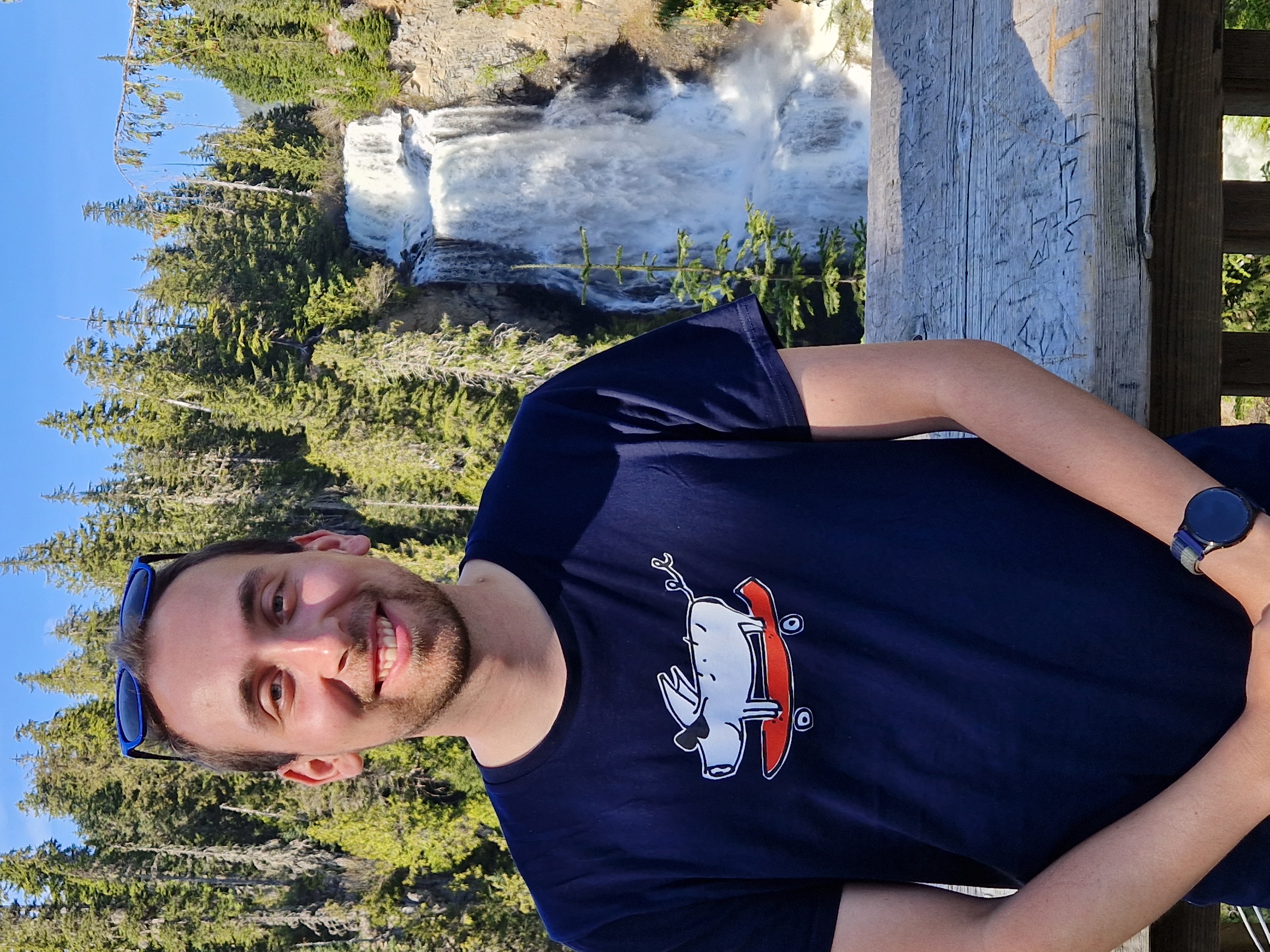
Spotlight on data by
Wouter van der Vegt · Ecology & Evolution
Interviewed on 2026-06-24
"It is our responsibility as scientists to show colleagues, stakeholders, and ultimately the wider public how we arrived at our conclusions."
-
 Keywords
TraitSoil faunaUrban biodiversityOpen dataCommunity ecologyGround beetlesYoda -
 Information of Wouter
 The interview
Can you introduce yourself and tell us which research group you are part of?
My name is Wouter van der Vegt and I am a PhD candidate in the Ecology & Evolution section. I started my adventure here at the VU almost ten years ago as a biology bachelor student and over time became more and more fascinated by small critters such as spiders, isopods, springtails (if you don't know them, Google them; they are cool), and beetles. Thus, it was an obvious choice to pursue an internship steeped in ecology. Little did I know that this was the first spark that led me to study the creatures that live right beneath our feet in cities.
What is your research project about, and what kind of data do you work with? How do you typically collect or generate it?
I work on the biodiversity and traits of fauna in urban environments. More specifically, I am unravelling hidden biodiversity by examining those often overlooked, namely soil fauna. Although many (soil) species suffer from human impacts, some do not, and others even flourish in human-dominated ecosystems. That's where the traits come in. By looking at which traits the animals have in cities, and which traits they have outside of cities, we can infer what kind of 'trait package' these animal communities need to 'do well' in cities. Other similar green spaces that haven't been investigated or are still being built (but are designed to look similar) are then expected to host animals with similar traits.
The animals, in my research mainly ground beetles, are collected via pitfall traps (small buckets placed into the soil, with the opening at surface level) placed in urban green spaces — this has led to multiple weird gazes or people highly intrigued by what 'that guy' [me] was doing in the bushes. After placing the traps, we wait a few days and come back to collect them. In the lab, we identify the species, measure traits such as heat tolerance and walking behaviour, and complement these with traits previously described in the literature. So there is enough diversity in my work and the species that I work with.
Are there any RDM tools or practices you use, whether provided by the VU or not, to store, document, or organise your data?
I had good chats with both data stewards about how to store and archive my data. I work day-to-day in Google Drive, but our conversations made it clear that YODA was the place to store and archive the relevant data and scripts associated with the manuscript I was about to submit. I started with a README template from a colleague (who originally had received this from RDM team and adapted it to their liking). I edited and tweaked it to fit my project and before long everything was done, documented and FAIR.
Is your data accessible to others? If so, where can we find it? Are there any related outputs linked to it, such as code, publications, or a preprint?
Absolutely! The more, the merrier. That applies to both open data and people. It can be retrieved, along with the scripts, on YODA. The preprint is accessible here.
Now that your data is publicly available, what do you think the biggest benefit will be for yourself, for your field, or for others?
Although it would be nice if my data were cited, that is not really my motivation. To me, it simply feels like the right thing to do. At conferences, I've heard PIs say they can no longer make sense of their datasets from a few years ago and laugh about it (let alone that someone else will be able to understand it…). I get that it is extra work to properly document and annotate, and in some cases, privacy concerns can complicate it and needs to be handled carefully. However, I'd say it is our responsibility as scientists to show colleagues, stakeholders, and ultimately the wider public how we arrived at our conclusions.
There is also a practical benefit. Finding a well-documented dataset and script that does what you want to do with your data can save a huge amount of time. There is no need to re-invent the wheel if this is openly available (and actually works!). As long as you understand what it is doing and verify that it works not only for the original data, but also for your own analyses, everyone benefits ;).
 Thank you, Wouter!
Thank you, Wouter, for sharing your data journey and your inspiring reminder that a well-documented dataset and script can save everyone from re-inventing the wheel!