 Research Data Spotlight — Edition 3
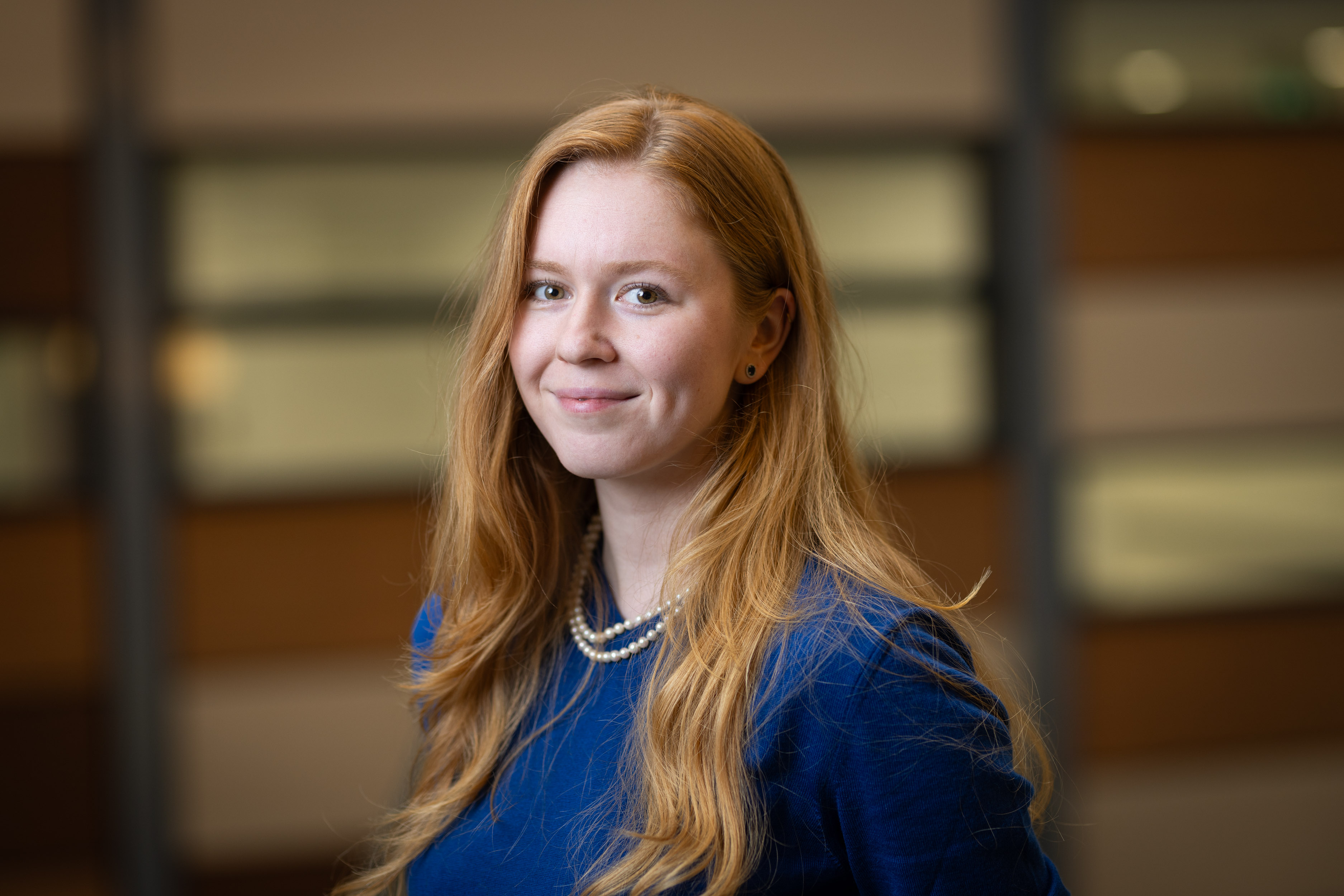
Spotlight on data by
Simone van de Zande · Systems Biology
Interviewed on 2025-03-11
"Good communication, clear documentation and a well organised data structure make collaboration and sharing much easier."
-
 Keywords
Experimental evolutionImaging dataSequencing dataMicrobial physiologyAdaptive laboratory evolution (ALE) -
 Information of Simone
 The interview
Can you tell us a bit about yourself and which part of your research group you are part of?
I am someone who likes to do a bit of everything. I obtained two BSc degrees, one in Biomedical Sciences (UM) and one in Business analytics (VU) and combined these skills in a MSc in Bioinformatics and Systems Biology with a double major (VU). I am now part of the Systems Biology Lab as a PhD student working on the EVOGOLD project in which my colleagues and I are developing a new adaptive laboratory evolution (ALE) method and auxiliary device. There are many unknowns in this project, and I particularly enjoy the multidisciplinary approach — we tackle microbiology while also designing our own bioprocess, considering factors like fluid dynamics.
What is your research project about, and what kind of data do you work with?
The EVOGOLD project focuses on developing a new method for experimental evolution. As we are working with a novel device, which is still under development, the project involves a lot of characterization of growth within this new system. To achieve this, we built a custom imaging setup to track microbial behaviour and then we use custom python scripts for analysing high-quality time-series imaging data. Additionally, since the goal of this new method is to elicit (beneficial) mutations, a lot of whole genome sequencing data is collected as well as phenotypical data of these strains. We carefully catalogue these strains and their properties to establish links between the grown strains, their mutations, and growing conditions.
What challenges have you faced in managing your research data so far?
The challenging part was to maintain an overview and transparency in our data since we are creating a large collective database. We have had to have good discussions about our strategies and luckily the RDM team helped us with creating a complete list of variables that we should keep track of to make our data comply with FAIR principles.
How do you collaborate and manage your project with other contributors? What strategies have helped make collaboration easier for you?
We keep our experiments in shared folders, along with a file describing results and locations for easy comparison and retrieval. We have also created a uniform file naming structure and corresponding abbreviation list that not only facilitates the file system, but also enables us to easily identify contents from the file and folder name.
For managing microbial strains, we use an excel file with templated layout which is shared throughout the PI's group in OneDrive such that it can periodically be updated into one collective file. The layout incorporates standard identifiers, such as GenBank IDs and NCBI taxonomy IDs.
For our Python scripts developed for analysing the images we maintain a shared repository with version history and a log of changes and dependencies.
Based on your experience so far, what is one data organisation/tool tip that has made your life easier and that you think other A-LIFE researchers should know?
I do not rely on specific tools to recommend, but I believe good communication and establishing clear agreements with collaborators are crucial, as everyone has their own logic and approach to data management. Creating a consistent structure for documenting and storing data, along with clear descriptions, helps facilitate data sharing not only within the team but also for others who may need access later.
 Thank you, Simone!
Thank you, Simone, for sharing your fascinating research and also for sharing thoughtful tips on data management — success with this fascinating project!