 Research Data Spotlight — Edition 2
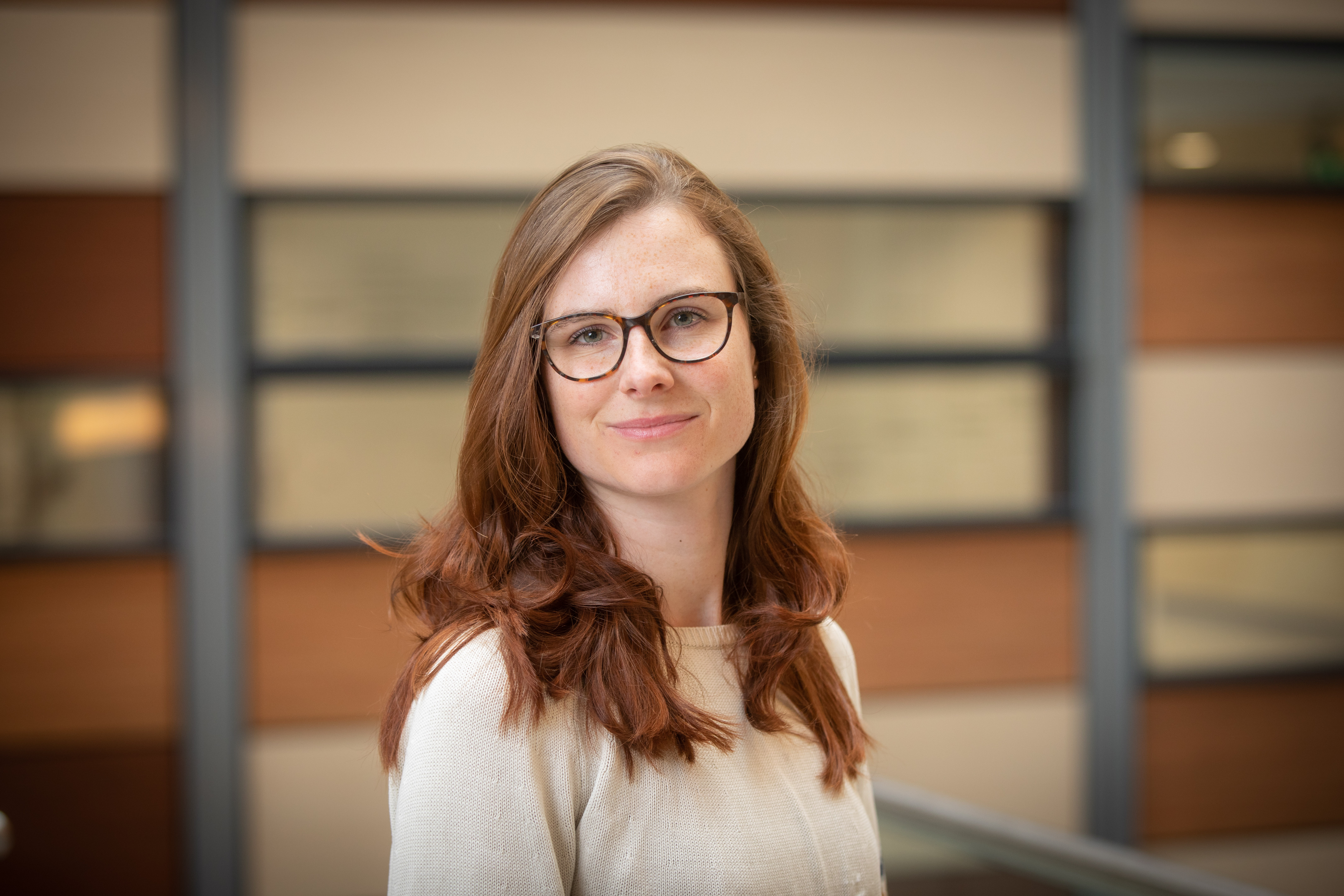
Spotlight on data by
Judith Smit · Sensory Ecology & Evolution
Interviewed on 2025-02-17
"Providing clear annotations in your code and creating a good README file make your work more understandable for others and you'll benefit from it yourself."
-
 Keywords
Behavioural EcologySexual communicationNoise pollutionLight pollutionEngystomops pustulosusTúngara frogDataverseDryad -
 Information of Judith
 The interview
Could you briefly introduce yourself? What has your academic journey been like so far, and which research group are you currently part of?
I am very interested in why animals do what they do, and specifically how their communication systems work. I love designing and conducting experiments on animal behaviour! After obtaining my BSc and MSc on animal behavior at Utrecht University, I started my PhD at the VU. I investigated the effects of urbanization on sexual communication in túngara frogs, and obtained my PhD in October 2024. I'm very excited to start my postdoc at the Smithsonian Tropical Research Institute in Panama in 2025, during which I will investigate communication in treehoppers.
Can you tell us about a specific dataset from your research? Why is it significant to your project, and what makes it particularly important?
In October 2024 we published an article in Behavioral Ecology titled "Urban sensory conditions alter rival interactions and mate choice in urban and forest túngara frogs", which was the last chapter of my PhD dissertation. In this project we conducted behavioural experiments to test how light and noise pollution affect rival interactions and mate choice. We collected many different data sets, and we need to write a long code to merge data sets and to run statistical models and simulations. When we first submitted the paper to a journal in January 2024, we decided to publish a pre-print in BioRXiv together with the data sheets and the R code. This preprint was downloaded more than 300 times before the final manuscript was published in a scientific journal. Doing science (from conceiving the idea to publishing the manuscript) usually takes several years, and by publishing preprints this process can hopefully be sped up.
To me, open science is very important for two main reasons. First, it provides transparency, for instance during the review process. Although reviewers are often limited in their time, I believe reviewing the data sheets and code could improve the quality of science. Second, by sharing data and code other researchers could benefit, for example by using similar analyses. It could benefit science overall if people did not have to keep inventing the wheel over and over again. I hope we are moving into the direction in which sharing data and code will be mandatory when submitting a manuscript.
Have you used any storage tools or any data management solutions provided by the VU? What feature of the solution do you think has been for you the most useful for your research workflow?
I had very helpful advice from VU where I could share my data and code at the pre-print stage. Also, the A-LIFE RDM team shared with me a template for making a README file, which was very helpful for me as well! When the journal required me to upload the data to Dryad, it was very easy to modify my README file to fit the specific template of this repository.
Is your dataset available for others to access? If so, where can we find it? Are there any related works linked to it? If yes, how did you go about linking the sources?
Yes, the data and the code are openly available. Data via Dryad, and the code via Zenodo. With the preprint I used DataVerse to upload the data and the code. Upon acceptance of the manuscript, the journal required us to upload the data via Dryad, and it was possible to add a link to Zenodo for the R code. For Dryad there was a specific format for the README file, which included a section with general information such as the time and location of data collection and language used in the field. Besides, each column header in the data sheets required a description and unit. Fortunately, I had already worked on making a clear README file before and modifying it for Dryad was pretty easy!
Looking back at your experience managing this dataset, what tips would you give to researchers for organising and managing their data more effectively? What helped you avoid data chaos?
I would advise others to consider publishing a pre-print, the code and data sheets in an early stage in the publication process. For this, it is important to provide clear annotations in the code for others to understand it and to create a README file for the data set to make it understandable for others. If I am working on data sets and code with the plan of sharing, it definitely forces me to make my work more clear and readable (which I am benefitting from myself as well  ).
).
 Thank you, Judith!
Thank you, Judith, for sharing your fascinating research and also for sharing thoughtful tips on data management — good luck with your new adventure in Panama!